Spider Boom or Crawler Boom: Which Placing Boom Suits Your Site
Spider booms are crane-lifted and compact; crawler booms drive themselves. Ground conditions and crane availability decide which one earns its cost on your site.
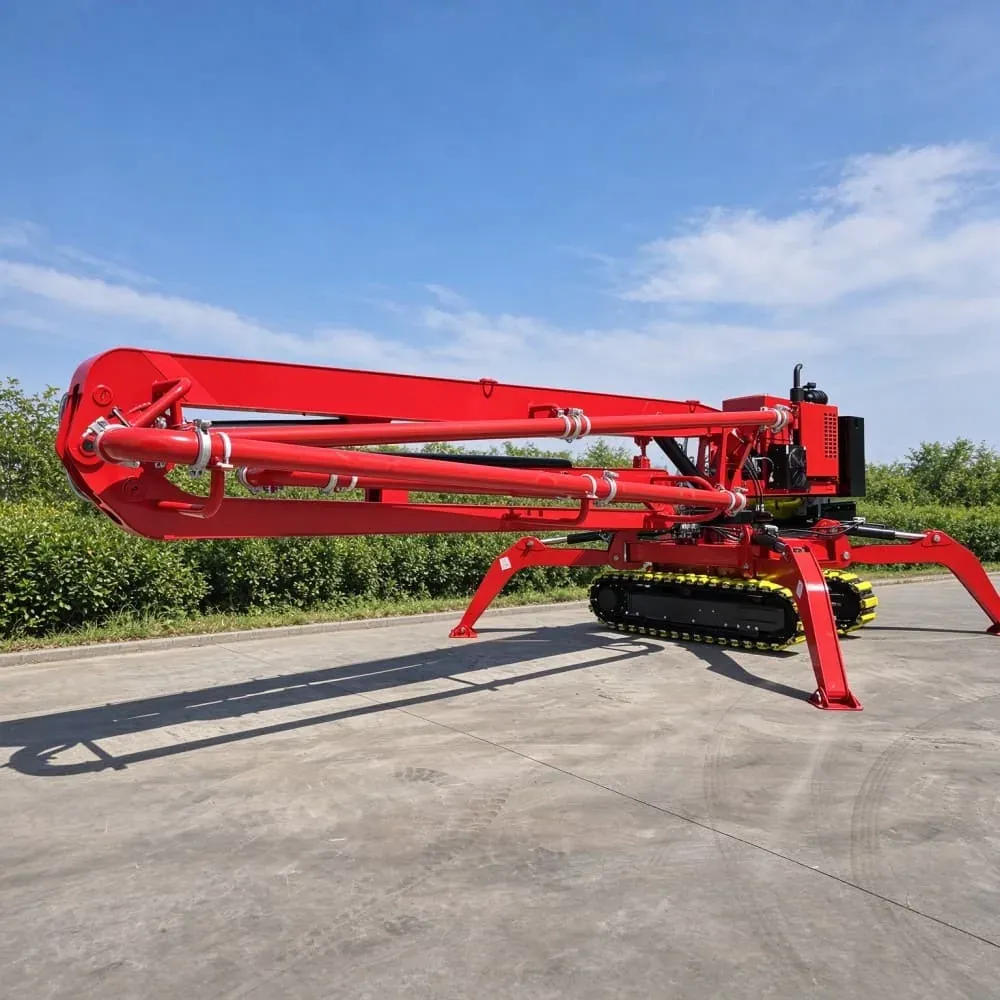
A spider boom is hoisted between positions and needs a crane; a crawler boom drives itself on tracks and needs drivable ground. That single difference decides most of the choice, because on a site where the tower crane is the bottleneck a crawler boom works more hours per day, and on an upper floor where no tracked machine can go only a lifted boom is possible.
This comparison is for contractors planning concrete placement across a site with many pours, and for dealers advising buyers who have both ground-level and elevated work. It sets out where each format wins, what each costs in preconditions, and how the ZHS spider and crawler ranges map onto the decision. It does not cover pump selection, which is a separate question about pipeline length and mix.
The crane is usually the real constraint
On a busy site, a placing boom that needs a lift competes with formwork, rebar and precast for the same crane. The lift also has to fit a weather window, and on a windy week the pour schedule slips whether or not the machine is ready.
A crawler boom removes that competition. The crew drives it to the position, sets the outriggers, pours, retracts and moves on. On a site with a dozen separate foundation or ground-beam pours in a shift, that independence is worth more than any reach advantage, because the machine is never waiting for a crane that is working three floors up.
The ZHS crawler range covers the PB12-3, PB19-3, PB20-4 and PB23-4. The PB20-4 pairs a tracked undercarriage with a four-section boom for pours obstructed by existing structure, and the PB23-4 is the largest, for sites where pour positions are spread widely and few setups per shift is the whole value proposition.
Where a lifted boom is the only option
A crawler boom cannot go where the machine cannot drive. Upper-floor pours, pours inside a building, pours reached only through a narrow opening, and sites with soft or ungraded ground all rule out a tracked machine. Those are exactly the cases where a spider boom earns its place.
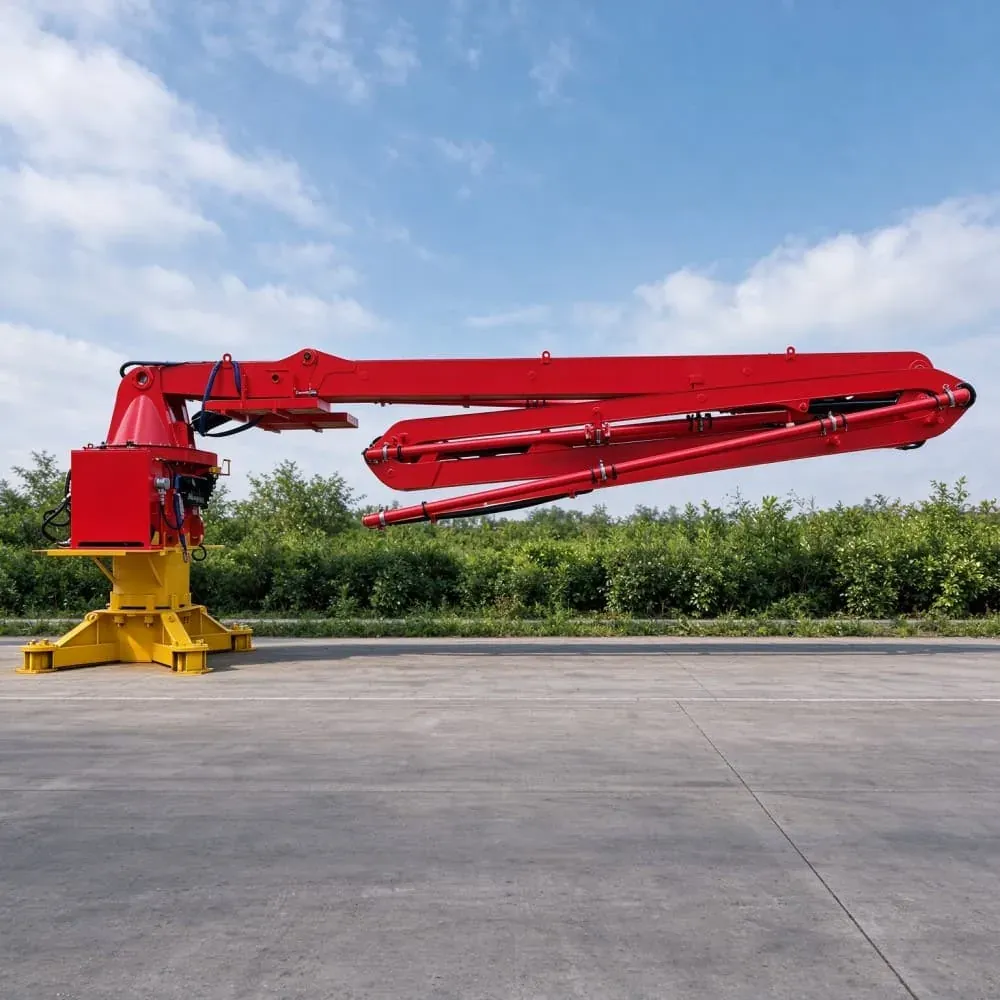
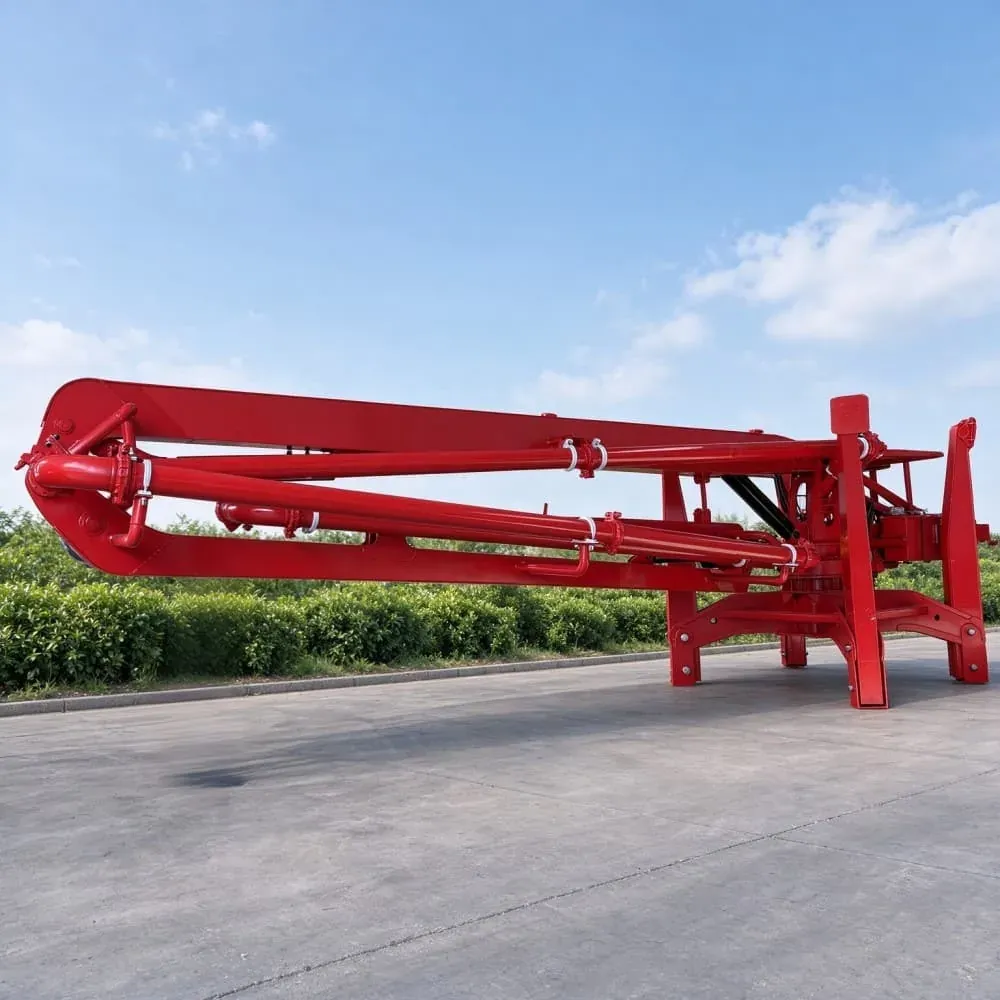
The ZHS spider range runs from the PB12-2 at 11.6 m reach and 1.8 t bare weight through the PB14-3, PB17-3, PB21-3, PB21-4 and PB23-3 to the PB15-3, covering compact footprints from 2325 mm to 5000 mm. A site crane hoists them between levels, and the outriggers deploy on the deck.
The practical advantage of the spider format on elevated work is its footprint. A machine that opens to 2.3 m can be positioned in places a 5 m footprint cannot, which matters on a deck with a dense column grid more than raw reach does.
Ground bearing decides crawler feasibility
Before specifying any crawler machine, check the ground: track loading, outrigger bearing pressure and the route between pour positions all matter more than boom length. A crawler boom that cannot reach the pour because the ground will not take it is a machine sitting idle, and that failure mode is invisible on a range sheet.
Send the site layout with the drive route marked and the ground bearing capacity in the enquiry. With those two inputs we can say whether the machine fits the route and the bearing requirements before any reach figure is discussed, which is the order that saves the most wasted work.
Cost comparison over a project, not per machine
Comparing purchase price alone misleads here. A crawler boom usually costs more per unit than a comparable spider boom, and it is worth more per shift on a site where lifts are scarce. On a project with only a handful of pours, the crane-lifted machine is cheaper overall because the mobility advantage never gets used.
The honest comparison is machine cost plus crane time plus repositioning labour, over the number of pours the project actually contains. Dealers advising a contractor on a multi-phase infrastructure job usually find the crawler arithmetic wins; on a single building with a handful of slab pours, the spider boom usually does.
What stays the same across both formats
Both ranges share the Φ125 mm delivery pipe with a 3 m end hose, so end hoses and clamps are interchangeable across a mixed fleet. Both use a normally closed slewing brake and full 360 degree rotation, and both are built from CNC laser-cut high-strength steel with an 8-hour factory pressure test before dispatch.
That shared architecture matters for dealers holding stock and for contractors running several machines: one line of consumables rather than a separate list per machine class. It also means an operator trained on one format recognises the control layout on the other.
Maintenance patterns differ with the format
A crawler machine adds an undercarriage to the maintenance list: track tension, rollers, idlers and final drives all need attention on a schedule, and track wear is proportional to the ground conditions on site rather than to the number of pours. A spider boom has no undercarriage, so its maintenance concentrates on the hydraulic system, the boom pins and the delivery line.
That difference favours the crawler on a site where the machine runs many short moves across rough ground, and favours the spider where the machine is set up once and worked hard. Neither pattern is better in the abstract: the question is how many reposition cycles the project contains and what the machine has to travel over between them.
Both formats share the same delivery line specification, with a Φ125 mm pipe and a 3 m end hose, so consumables are interchangeable. Dealers running a mixed fleet stock one set of end hoses and clamps rather than two, which matters more than it sounds when a single lost clamp can stop a pour.
Transport and mobilisation
A spider boom travels as a compact package that a site crane hoists, which makes it straightforward to move between projects on a flatbed. A crawler boom can drive onto a trailer under its own power, but the machine is heavier and the loading needs planning, especially where the site access is a ramp or an ungraded track.
For a dealer selling into a market where machines move between customer sites, the spider format is easier to demonstrate and easier to re-market, because it does not depend on the buyer having a transporter with a suitable ramp. For a contractor with a fleet of tracked plant already, the crawler format fits the existing logistics.
Operator implications
Operators trained on a spider boom recognise the control layout on a crawler machine, because both ranges use the same boom architecture and control conventions. The new skill on a crawler machine is driving and setting the undercarriage rather than operating the boom, and that is a smaller training gap than moving between two unrelated brands.
Where a crew already runs tracked plant, the crawler placing boom slots into existing competence. Where a crew is used to crane-lifted equipment and a single setter, the spider format introduces nothing new at all, which on a tight programme is worth more than a specification advantage that requires retraining mid-project.
How to settle the choice
Answer four questions. Can the site crane lift the machine between positions without delaying the pour? Can a tracked machine drive to every pour position on ground that will bear it? Are the pours at ground level, elevated, or both? And how many pours does the project contain, because the mobility advantage only pays over repetition?
Send those answers with the pour positions marked on the layout, and we will name the format and the model rather than a range. Every ZHS unit carries a 1 year or 2,000 hour guarantee, with ODM production available for dealers who need their own branding.