What a CE Mark Actually Covers on Concrete Placing Equipment
A CE mark on a placing boom or trailer pump is a declaration against specific standards, not a generic quality badge. Here is what it does and does not tell a buyer.
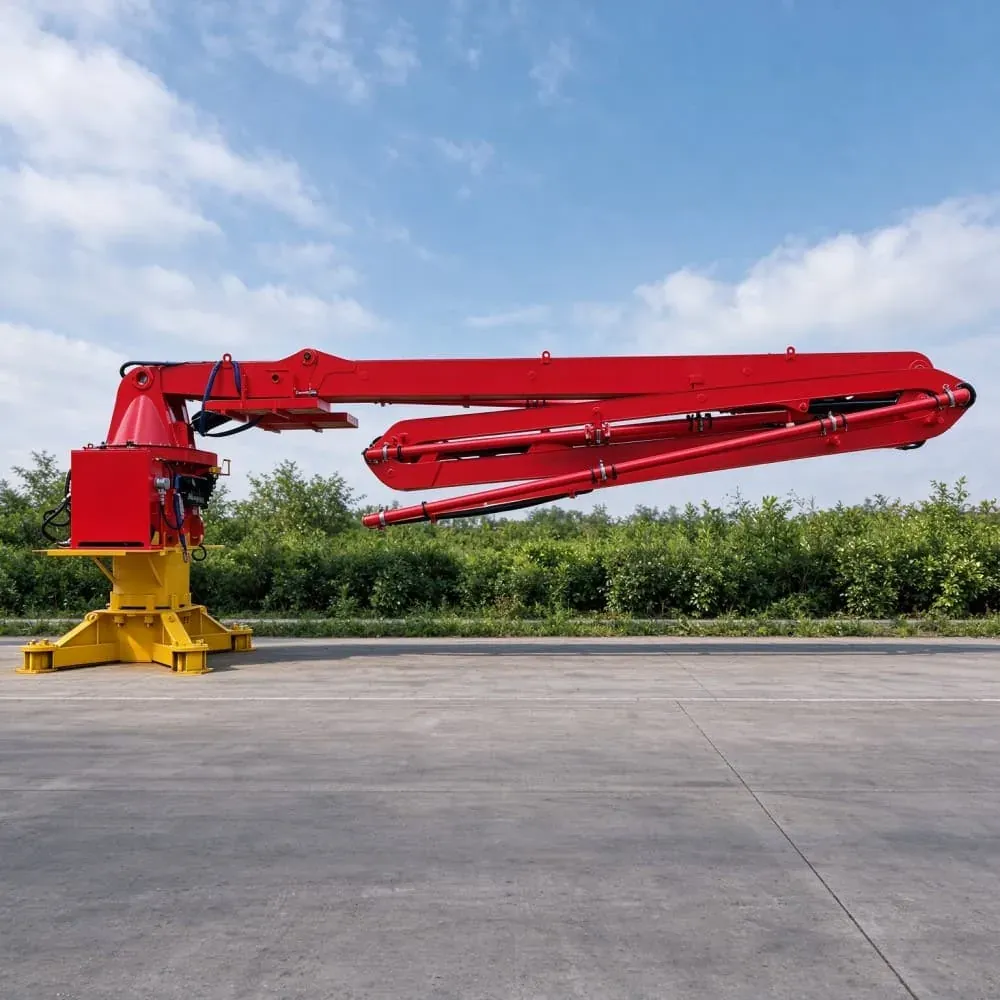
A CE mark on concrete placing equipment is the manufacturer declaration that the machine meets the applicable European directives and harmonised standards, and that a technical file exists to support it. It is not a quality grade, not a performance rating and not a statement that the machine suits your site. What it does tell you is that a conformity route was followed and documented, which is the part a buyer cannot verify by looking at the machine.
This guide is for buyers and dealers assessing CE documentation before an order, especially when importing into a market where the certificate is checked at the port or by a site safety officer. It sets out what the declaration covers, what the technical file contains, and which questions to ask a supplier before accepting a CE claim. It is not legal advice and does not replace national market requirements.
The declaration is about conformity, not quality
The mark states that the equipment meets the applicable requirements, and it comes with a declaration of conformity naming the directives and standards applied, the manufacturer and the responsible person in the market. Two machines can both carry the mark and differ entirely in build quality, because the mark certifies a route to conformity rather than a level of finish.
That is why a CE certificate on its own is a weak basis for choosing between two suppliers. It answers a compliance question, and the buyer still has to assess build specification, test regime and support separately.
What the technical file has to contain
Behind the mark sits a technical file: drawings, a risk assessment, the standards applied, test records and the instructions for use. The file is what a market surveillance authority would ask for if the machine were challenged, and it is the document a serious buyer asks to see rather than a certificate image.
On ZHS machines the file is backed by an 8-hour hydraulic and water pumping test performed before dispatch, with the result recorded against the unit. That test is factory practice rather than a CE requirement, and it is the part of the record that tells a buyer the machine was actually run rather than just assembled.
Questions worth asking before you accept a CE claim
Ask which directives and harmonised standards the declaration cites, because a declaration with no standard references is not a useful document. Ask who the responsible person in the market is, since that is the party a regulator contacts. Ask for the risk assessment and the test records for the specific unit rather than for the model.
Ask whether the machine can be supplied with the documentation set for your specific destination, including a certificate of origin and any national marking requirement beyond CE. Markets differ, and a supplier who has shipped to your country before will answer quickly.
What the mark does not cover
The mark does not certify the site: a CE-marked boom can still be positioned on a deck that cannot carry it, and it does not settle temporary works load. It does not cover operator competence, maintenance regime or the condition of the machine after five years on site.
It also does not guarantee the machine suits your pour. Reach, outrigger footprint, hoisted weight and deck capacity remain specification questions that CE documentation does not answer, and mixing the two conversations up is how buyers end up with a compliant machine that does not fit the job.
National regimes beyond CE
CE covers the European market, and several other markets maintain their own conformity regimes that a CE declaration does not satisfy on its own. A buyer importing into a market with a national scheme should confirm which documents the customs authority and the site safety regime actually ask for, because a CE certificate presented where a local registration is required delays the shipment at the port.
The practical approach is to name the destination country in the enquiry. Suppliers who have shipped there before know which documents apply and how long they take to issue, and that information belongs in the quotation rather than in a conversation after the container has sailed.
The documentation package that travels with the machine
A complete shipment usually carries the declaration of conformity, the instruction manual in the destination language, the test record for the specific unit and a certificate of origin where the buyer needs one for duty purposes. Missing any of these turns a routine import into a negotiation at the port.
Ask for the test record for the serial number you are buying rather than for the model in general. An 8-hour hydraulic and water pumping test recorded against a specific unit is evidence that the machine was run, and that is a different claim from a certificate stating that the design conforms.
What site acceptance usually adds
Site acceptance on concrete placing equipment typically checks the delivery line pressure test, the outrigger and slew function, the emergency stop and the control response. A machine that passed a factory test can still fail acceptance if it was damaged in transit, which is why the acceptance checklist belongs to the receiving site rather than to the supplier.
Suppliers who understand this provide the factory test record in a form that a site engineer can compare against the acceptance results. That comparison is what turns a certificate into a useful document, and it is the part of the paperwork buyers most often overlook until something goes wrong.
The instruction manual is part of the conformity
The instructions for use are part of the technical file, and they have to be in the language of the destination market. A manual in the wrong language is not a paperwork inconvenience: it means the operator documentation required by the conformity route is missing, and a site safety officer can refuse the machine on that basis alone.
Ask for a sample page of the manual in your language before the order, not after. It is a cheap way to check whether the supplier documentation is genuinely prepared for your market or assembled from a template.
Risk assessment and residual risks
The risk assessment identifies the hazards the machine presents and how the design reduces them. It also lists the residual risks the operator has to manage, and those are the parts worth reading before the machine goes to site: stability limits, wind limits and the restrictions on operating the boom near people.
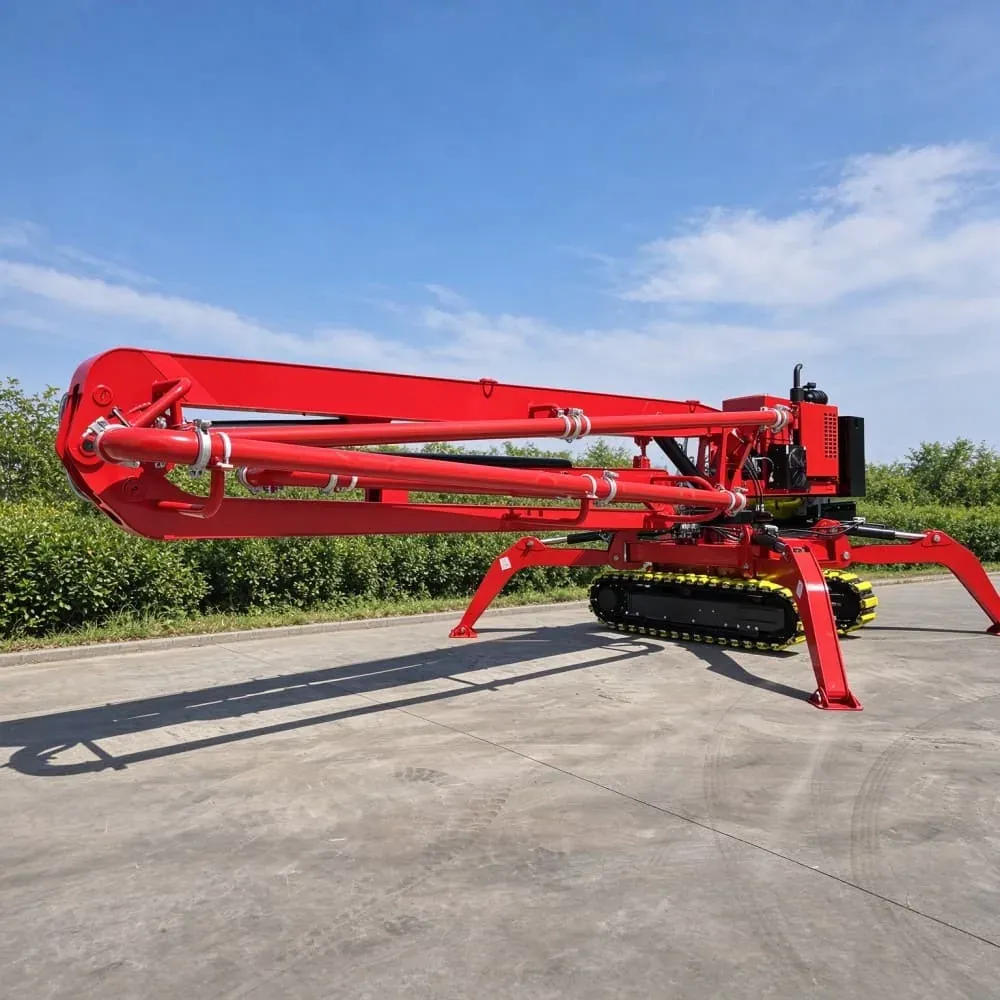
For the ZHS spider range the stated working wind limit is Grade 6 on several models and the working temperature band is -5 °C to 40 °C. Those figures belong in the operating plan, not only in the certificate package, because they are what the site uses to decide whether a pour can proceed.
Spare parts as a conformity-adjacent question
A machine that conforms at delivery can stop conforming in use if a critical component is replaced with a non-equivalent part. That is why the supply of genuine parts is part of the practical conformity story rather than a commercial add-on, and why suppliers that hold stock matter to buyers operating in markets far from the factory.
Ask what is in the spare parts library, what the delivery time is for common wear items and whether the components are the same brands used in the original build. A component substitution that looks like a saving at the counter can cost a warranty claim later.
The other marks on the range
ZHS equipment is specified against CE, ISO, Euro V and Tier-4 compliance as applicable to the build, and units carry a 1 year or 2,000 hour guarantee. For dealers, the documentation set that ships with a unit is confirmed against the destination market at quotation stage rather than assumed.
If you are preparing an import and need the documentation list for your market, send the destination country, the models you are considering and the quantities, and our team will reply with the documents that apply and the lead time for them.